Published June 2026.
Residual Solvent Testing in Printed Packaging Materials: Why Objective Measurement Matters for Quality, Process Control, and Brand Protection
Published July 2026.
Residual solvent testing has become an increasingly important part of quality control within the flexible packaging industry. As packaging structures become more sophisticated and brand owners demand higher levels of packaging quality assurance, converters are under growing pressure to demonstrate that printed materials are safe and stable. The stakes are particularly high for food, pharmaceutical, and medical device packaging, where even trace amounts of residual solvents can compromise product integrity and consumer safety.
Although solvent-based printing systems remain highly effective for many flexible packaging applications, they introduce critical challenges for certain (usually ingestible) products. Most notably, how do you ensure that residual solvent levels remaining in the finished structure are sufficiently low to avoid both product contamination and compromising the packaging?
These challenges are increasingly addressed through fast, production-oriented analytical technologies that enable more frequent testing and faster decision-making compared to traditional laboratory approaches. This comprehensive guide on residual solvent testing by RDM Test Equipment explores what residual solvents are, why they matter, how they are measured, and how analytical data can be leveraged for compliance, consumer safety, production optimisation, and brand protection.
Whether you’re a quality control manager seeking to enhance testing protocols or a compliance officer navigating regulatory requirements, understanding the principles of objective solvent measurement is essential for maintaining the highest standards of packaging quality.
Key Takeaways: Residual Solvent Testing in Printed Packaging Materials
- Residual solvents in printed packaging materials pose significant risks to product safety, regulatory compliance, and brand reputation, particularly in food & beverage, pharmaceutical, and medical device applications.
- Objective measurement using analytical technologies such as gas chromatography provides accurate and repeatable data that subjective methods like sensory evaluation cannot deliver. This is critical to adhere to strict regulatory limits for residual solvent levels in packaging materials.
- Systematic solvent testing protocols integrated into production workflows enable real-time process control, early detection of drying system issues, and optimisation of manufacturing parameters.
- Data-driven solvent testing strategies protect brand reputation by preventing costly recalls, therefore ensuring consistent product quality and demonstrating commitment to consumer safety and regulatory compliance.
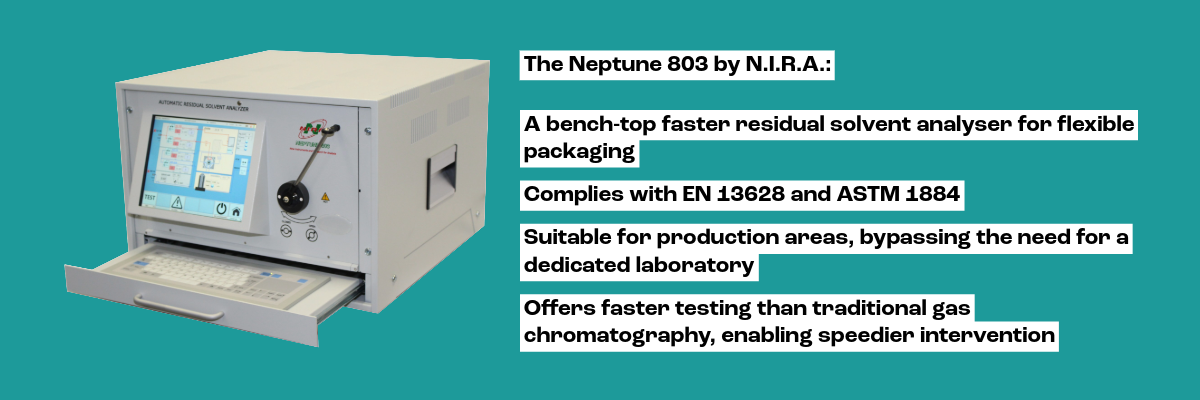
- Advanced testing equipment, like the Neptune 803 by N.I.R.A., allows converters to balance production efficiency with quality assurance, reducing waste and downtime while maintaining strict safety standards.

Understanding Residual Solvents in Printed Packaging: The Hidden Risk to Product Integrity
Residual solvents are traces of volatile organic compounds (VOCs) that remain in printed packaging materials after the drying process. In solvent-based gravure and flexographic printing (common methods for flexible packaging production), solvents such as ethyl acetate, isopropyl alcohol, toluene, acetone, and various ketones are used as carriers for inks, coatings, and adhesives. While the majority of these solvents evaporate during the drying process, small quantities can become trapped within the laminated structure or absorbed into substrate materials.
The presence of residual solvents creates multiple risks across the packaging supply chain. From a product safety perspective, solvents can migrate from the packaging into the contents, particularly with foods containing fats or oils that act as solvent carriers. This migration can alter product taste, odour, and in some cases, introduce compounds that pose health concerns when consumed at certain levels. For example, products like confectionery, chocolate, coffee, and tobacco, absorb odours extremely easily, while acetates and ketones can cause noticeable sensory effects even at relatively low concentrations. For pharmaceutical and medical device packaging, where sterility and chemical stability are paramount, even trace solvent contamination can compromise therapeutic efficacy or violate strict regulatory requirements.

Beyond direct product contamination, residual solvents can also compromise the structural integrity of the packaging itself. Excessive solvent retention may weaken lamination bonds, reduce heat seal strength, or cause delamination during storage and distribution. Such structural failures can lead to package leaks, reduced shelf life, and increased product spoilage or rejected product batches. The complexity of modern multi-layer packaging structures, which may combine printed films with barrier layers and sealant materials, creates multiple opportunities for solvent entrapment if drying parameters are not precisely controlled.
Understanding the behaviour of different solvents within various substrate materials is essential for effective quality control. Factors such as solvent vapour pressure, substrate porosity, ink film thickness, printing speed, and drying tunnel configuration all influence the final residual solvent levels. This complexity underscores why objective measurement is critical. Visual inspection or subjective odour assessment cannot reliably detect the low-level solvent presence that may still pose risks to product integrity and regulatory compliance.
The Critical Role of Objective Measurement in Solvent Detection and Quantification
Objective measurement transforms residual solvent testing from subjective guesswork into precise, data-driven quality control. Traditional sensory methods – such as smelling printed materials or visual inspection – lack the accuracy, repeatability, quantitative measurement, and traceability required for modern packaging quality assurance systems. These subjective approaches cannot detect solvents below the human odour threshold, vary significantly between operators, and provide no quantitative data for process optimisation or regulatory documentation.
Gas chromatography (GC) has emerged as the industry standard for residual solvent analysis, offering unparalleled sensitivity and specificity. This analytical technique separates individual solvent components and quantifies their concentrations with precision typically measured in parts per million (ppm) or milligrams per square metre (mg/m2).
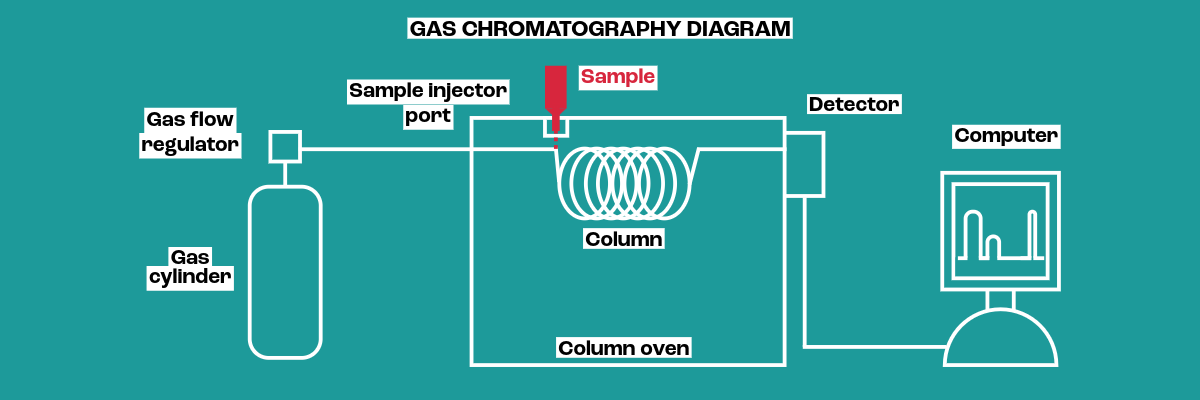
Headspace gas chromatography, in particular, has become widely adopted for packaging testing because it analyses the VOCs released from a sample without requiring complex extraction procedures. Using flame ionisation detectors (FID) or mass spectrometry (MS), the GC approach generates results while maintaining the high accuracy necessary for regulatory compliance and process control decisions.
The value of objective measurement extends far beyond simple pass/fail determinations. Quantitative solvent data enables converters to establish baseline performance metrics for their drying systems, identify process drift before quality issues arise, and optimise production parameters for maximum efficiency. By tracking solvent levels across production runs, quality control managers can correlate residual solvent data with specific process variables, like drying temperature or ink formulation changes. These data can then inform the implementation of targeted improvements that enhance both product safety and operational efficiency.
Having said this, traditional GC methods do have their limitations. Analysis typically requires a dedicated clean and temperature-controlled laboratory space, trained personnel, and analysis times ranging from 45 minutes to several hours per sample. The subsequent turnaround time leads to bottlenecks in fast-paced production environments where rapid decision-making is essential for maintaining efficiency and minimising waste.
Therefore, one recommendation is the Neptune 803 by N.I.R.A., now available through RDM Test Equipment. A significant advancement in residual solvent testing technology, it addresses these key limitations and lends itself to routine quality control testing.
The Neptune 803 delivers rapid analysis results in 7 to 14 minutes. It is suitable for harsh, solvent-polluted environments, meaning the production-floor deployment capability of the instrument eliminates the need for samples to be transported to and from the lab, further reducing turnaround time and simplifying logistics. Operators with minimal yet appropriate training can conduct tests without specialised laboratory expertise, removing yet another critical bottleneck. When issues are identified immediately, operators can make process adjustments in real-time before significant quantities of non-conforming material are produced, reducing waste and protecting profitability. It also provides traceable documentation essential for quality system audits and customer requirements.
How Residual Solvents Impact Food, Pharmaceutical, And Medical Device Packaging Compliance
Regulatory frameworks across food, pharmaceutical, and medical device sectors establish strict requirements for residual solvent levels in packaging materials. These regulations recognise that packaging is not a passive container but an active component of product safety systems that must meet rigorous chemical and performance standards. Understanding these compliance requirements is essential for converters, brand owners, and quality professionals seeking to maintain market access and protect consumers.
In the food packaging sector, regulations focus on preventing migration of unwanted substances into food products. The European Union’s Framework Regulation (EC) No 1935/2004 establishes the overarching principle that food contact materials must not transfer constituents to food in quantities that could endanger human health or alter food composition. Specific migration limits for individual solvents are established through supporting regulations and guidelines, with particular attention to substances of concern such as toluene and other aromatic hydrocarbons. EU Regulation 10/2011 specifically addresses plastic materials and includes restrictions on residual solvent content through migration limits. In the US, the FDA’s Code of Federal Regulations Title 21 provides similar frameworks, with specific limitations on solvent residues based on toxicological assessments and exposure modelling.
Pharmaceutical packaging faces even more stringent requirements due to direct product contact and the critical nature of drug stability. The International Council for Harmonisation (ICH) Q3C guideline categorises solvents into different classes based on toxicity and establishes permitted daily exposure (PDE) limits. Class 1 solvents, which include known carcinogens like benzene, should be avoided entirely in pharmaceutical manufacturing and packaging. Class 2 solvents are limited to specific concentration thresholds, while Class 3 solvents have less stringent restrictions but still require monitoring and control. Packaging converters supplying pharmaceutical markets must demonstrate compliance through validated analytical methods and comprehensive documentation systems.
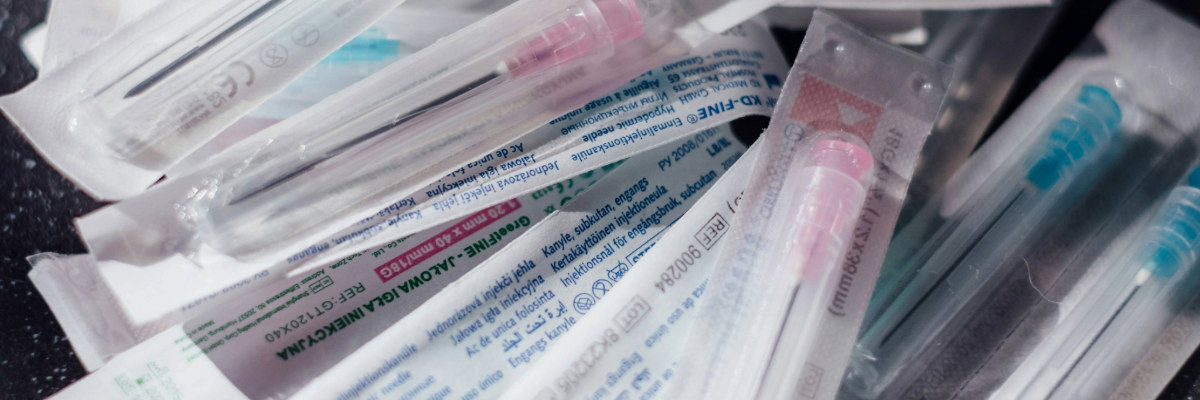
Medical device packaging presents unique challenges because it must maintain sterility while ensuring that residual solvents do not compromise biocompatibility or material performance. ISO 11607 standards for packaging of terminally sterilised medical devices include requirements for material characterisation and validation, which encompass residual solvent testing. Particularly for flexible pouches and thermoformed trays used in sterile barrier systems, converters must provide evidence that residual solvents will not interfere with sterilisation processes, compromise seal integrity, or introduce extractables that could affect device performance or patient safety.
Compliance with these regulatory frameworks requires a systematic approach to residual solvent testing that delivers accurate, repeatable, and traceable analytical data. Quality control managers must implement testing protocols that not only verify compliance at the point of manufacture but also provide confidence that solvent levels will remain acceptable throughout the packaging material’s shelf life and during end-use conditions. This regulatory complexity underscores the critical importance of investing in reliable analytical equipment, validated test methods, and trained personnel who understand both the technical and regulatory dimensions of residual solvent control.
Implementing Effective Process Control Through Systematic Solvent Testing Protocols
As previously emphasised, effective process control requires transforming residual solvent testing from an occasional verification activity into a systematic quality assurance protocol integrated throughout the production workflow. The most successful converters implement multi-stage testing strategies that combine incoming material verification, in-process monitoring, and finished goods release testing to create a comprehensive quality control framework. This layered approach enables early detection of process deviations and provides the data necessary for continuous improvement initiatives.
Incoming material testing establishes a quality baseline before production begins. While substrate manufacturers and ink suppliers typically provide certificates of analysis, independent verification protects converters from accepting materials with elevated solvent levels that could compromise finished product quality. Testing incoming materials also helps identify supplier variability that may require adjustments to printing or drying parameters. Otherwise, should insufficient drying occur, films may remain slightly soft or reels may block or stick together, resulting in scrap, downtime, waste, and lost production efficiency. This upstream quality control reduces the risk of producing non-conforming materials and provides valuable data for supplier performance evaluation and selection decisions.

In-process monitoring represents the most powerful application of residual solvent testing for production optimisation. By sampling materials immediately after printing and lamination – before they proceed to slitting, pouching, or other converting operations – quality control teams can verify that drying systems are performing as intended. Systematic in-process testing enables operators to detect drying tunnel malfunctions and airflow problems, identify the impact of line speed increases, and optimise temperature profiles for energy efficiency without compromising solvent removal. This real-time feedback loop transforms residual solvent data from a retrospective quality check into a proactive process control tool.
Establishing appropriate testing frequencies requires balancing quality assurance objectives with laboratory capacity and production economics. High-risk applications such as pharmaceutical packaging or products with aggressive migration characteristics typically warrant more frequent testing, potentially every production run or shift. Lower-risk applications may permit reduced frequencies based on demonstrated process capability and historical performance data. Statistical process control principles can guide these decisions by identifying the sampling rates necessary to detect process shifts with confidence while minimising testing costs.

Finished goods release testing provides final verification before products ship to customers. This critical quality gate ensures that only materials meeting specification limits reach the market, protecting brand reputation and preventing costly product recalls. Robust release testing protocols should include clear acceptance criteria based on regulatory requirements and customer specifications, documented testing procedures following validated analytical methods, and formal review processes with defined authority for release decisions. Integrating laboratory information management systems (LIMS) with enterprise quality management platforms enables seamless documentation and trend analysis alongside a rapid response when out-of-specification results occur.
The data generated through systematic residual solvent testing protocols provides valuable insights for continuous improvement initiatives. By analysing trends across multiple production runs, quality managers can identify opportunities to optimise drying system performance, reduce energy consumption, increase line speeds, or qualify alternative materials. This data-driven approach to process improvement generates measurable returns on investment in analytical equipment while simultaneously enhancing product safety and regulatory compliance. For converters seeking to differentiate themselves in competitive markets, the ability to demonstrate robust process control through comprehensive solvent testing data has become an essential element of customer quality requirements and supply chain audits.
Protecting Your Brand Reputation With Data-Driven Solvent Testing Strategies
Brand reputation in today’s market depends on consistent delivery of safe, high-quality products that meet consumer expectations and regulatory requirements. For brand owners relying on flexible packaging, undetected residual solvents represent a significant threat to reputation – capable of triggering consumer complaints, regulatory actions, product recalls, and lasting damage to brand equity. Implementing data-driven solvent testing strategies transforms this risk into a managed quality attribute that strengthens brand protection programmes and builds confidence across the supply chain.
The financial and reputational costs of solvent-related quality failures can be substantial. Product recalls due to off-odours, taste contamination, or regulatory non-compliance not only incur direct costs for retrieval and disposal but also generate negative publicity that can permanently alter consumer perceptions. Social media amplification of quality issues means that a single contamination event can reach millions of consumers within hours, creating brand damage far exceeding the immediate product loss. For packaging manufacturers, severe cases of excessive solvents could lead to supplier investigations and loss of approved supplier status. Meanwhile, for pharmaceutical and medical device manufacturers, solvent contamination issues may trigger regulatory investigations, manufacturing holds, and consent decrees with long-term business implications.

Proactive solvent testing strategies shift the focus from reactive problem-solving to preventive quality assurance. By establishing comprehensive testing programmes at both converter and brand owner levels, organisations create multiple verification points that dramatically reduce the probability of non-conforming materials reaching consumers. This defence-in-depth approach usually includes converter process control testing verified through incoming quality checks at filling or device assembly operations, with periodic third-party testing providing additional independent validation. The redundancy built into these multi-layer verification systems provides confidence that solvent issues will be detected and corrected before they impact end products.
Data-driven approaches enable brand owners to set scientifically justified specification limits that balance safety requirements with practical manufacturing capabilities. Rather than applying arbitrary pass/fail criteria, businesses can use migration modelling, shelf-life studies, and exposure assessments to establish risk-based solvent limits appropriate for their specific applications. This analytical approach supports supplier negotiations by providing clear, defensible requirements while allowing flexibility for converters to optimise their processes within defined quality boundaries. The resulting specifications serve as enforceable quality agreements that protect brand interests while fostering collaborative supplier relationships.
Transparency in solvent testing data strengthens partnerships throughout the packaging supply chain. Leading converters now provide customers with detailed certificates of analysis documenting residual solvent levels for each production lot, demonstrating their commitment to quality and enabling brand owners to maintain comprehensive traceability records. This data sharing supports rapid root cause analysis when quality issues arise and provides the documentation necessary for regulatory compliance and customer audits. For converters, the ability to consistently deliver products with documented solvent testing results has become a competitive differentiator that commands premium pricing and strengthens customer loyalty.
The long-term value of robust solvent testing programs extends beyond immediate quality assurance to support strategic business objectives. Organisations with demonstrated expertise in residual solvent control are better positioned to enter regulated markets, launch innovative packaging formats, and respond to evolving consumer preferences for product safety and transparency. By investing in analytical capabilities, validated methods, and skilled personnel, companies build technical competencies that create lasting competitive advantages. This strategic approach to quality assurance transforms residual solvent testing from a compliance necessity into a value-creating element of brand protection and business growth strategies.
FAQs about Residual Solvent Testing
What are residual solvents in packaging materials?
Residual solvents are volatile organic compounds (VOCs) that remain in packaging materials after printing, coating, or lamination, and drying processes. These solvents, such as ethyl acetate, isopropyl alcohol, and various ketones, are used as carriers in inks and adhesives but may become trapped within the packaging structure if not fully evaporated during drying.
Why is residual solvent testing important for food and pharmaceutical packaging?
Residual solvents can migrate from packaging into products, potentially causing taste and odour issues as well as chemical contamination. Testing ensures compliance with health-related regulatory limits, protects product integrity, maintains shelf life, and prevents costly recalls that could damage brand reputation.
What testing methods are used for residual solvent analysis?
Gas chromatography (GC), particularly headspace gas chromatography, is the industry standard for residual solvent testing. This analytical technique provides accurate, quantitative measurements of individual solvent concentrations, typically reported in parts per million (ppm) or milligrams per square meter (mg/m²). These methods deliver the repeatability and traceability required for regulatory compliance and quality control.
What are acceptable residual solvent limits?
Acceptable limits vary depending on the application, regulatory framework, and specific solvents present. Food contact materials typically target total residual solvent levels below 3-5 mg/m², while pharmaceutical packaging must meet ICH Q3C guideline limits based on solvent toxicity classifications. Medical device packaging often requires even lower levels to ensure biocompatibility and sterility maintenance. Specific applications may require even lower levels to prevent organoleptic issues such as odour or taste transfer. Consult relevant regulatory guidance and work with testing experts to establish appropriate specifications for your applications.
How often should residual solvent testing be performed?
Testing frequency depends on application risk, process capability, and regulatory requirements. High-risk applications such as pharmaceutical packaging may require testing every production run, while lower-risk applications might test weekly or according to statistical process control protocols. For the latter, once processes demonstrate consistent compliance, testing frequency may be reduced to periodic verification testing. Establishing appropriate frequencies requires balancing quality assurance needs with laboratory capacity and production economics.
What are the most common causes of elevated residual solvent levels?
Elevated residual solvent levels typically result from inadequate drying conditions, which may stem from insufficient drying time and temperature, as well as equipment malfunctions. High printing speeds that reduce dwell time in drying zones can prevent complete solvent removal. Complex laminate structures may trap solvents between layers, requiring longer or more aggressive drying cycles. Poor ventilation in drying systems can create solvent-rich atmospheres that inhibit evaporation. Material-related factors such as high substrate porosity or thick coating layers can also impede solvent removal. Systematic investigation of these potential causes, supported by testing data, enables effective troubleshooting and process optimisation.
Can residual solvents affect packaging seal strength?
Yes, excessive residual solvents can compromise lamination bonds and heat seal strength by interfering with adhesive curing or weakening substrate materials. Trapped solvents will vaporise when heated; the subsequent gas creates bubbles and channels within the molten plastic, compromising the seal. The solvents can also weaken the sealant layer, making the plastic film more brittle and more susceptible to external impact. Systematic solvent testing helps ensure that drying processes achieve both safety and structural performance objectives, preventing delamination, package leaks, and reduced shelf life.
What factors affect residual solvent levels in printed packaging?
Multiple factors influence residual solvent retention, including solvent volatility, ink film thickness, substrate porosity, printing speed, drying tunnel temperature and airflow, and the number of laminated layers. For example, excessive airflow may dilute VOC concentrations below efficient thermal oxidation thresholds, while insufficient airflow can increase solvent retention. Understanding these variables enables converters to optimise process parameters for consistent solvent control.
Can residual solvents migrate into products after packaging is complete?
Yes, residual solvents can migrate from packaging materials into products both during storage and throughout the product’s shelf life. Migration rates depend on solvent concentration, the chemical nature of both the solvent and the packaged product, temperature, storage duration, and the barrier properties of the packaging structure. This potential for post-packaging migration underscores the importance of controlling residual solvent levels at the time of manufacture. Shelf-life studies should include assessment of solvent migration where relevant to ensure product quality and safety throughout the intended use period.
How can converters reduce residual solvent levels?
Converters can minimise residual solvents through process optimisation strategies including increasing drying tunnel temperatures within substrate limits, reducing line speeds to extend drying time, optimising airflow patterns for efficient solvent removal, using more volatile solvent blends, reducing ink laydown, and implementing aging or curing periods after lamination. Objective measurement data guides these optimisation efforts by quantifying the impact of process changes.
How does residual solvent testing support sustainability objectives?
Comprehensive residual solvent testing supports sustainability in multiple ways. By enabling process optimisation, testing helps manufacturers use the minimum drying energy required to achieve quality standards, reducing energy consumption. Early detection of solvent retention issues prevents production of non-conforming material that would otherwise require reprocessing or disposal, minimising waste. Accurate solvent monitoring supports the use of more environmentally preferable solvents by providing confidence that these alternatives can meet quality requirements. Finally, preventing quality failures and recalls eliminates the substantial environmental impact associated with producing, transporting, and disposing of rejected products. Quality and sustainability objectives are fundamentally aligned when supported by effective testing programmes.
Related Posts